Welcome to the LDV NNR ringing blog, this blog is designed to share the experiences, findings and tales from a group of dedicated ringers. We specialise in conservation orientated research projects, largely focusing on wildfowl, waders, owls and birds of conservation concern, in and around the Vale of York NNR's.

NB - Whilst the purpose of this blog was initially designed to cover our nationally important wildfowl ringing activities, it now also features wildlife and work posts, explaining how we manage the NNR for both wildlife and people.

For daily sightings please visit our Twitter account: https://twitter.com/ldv_nnr (@LDV_NNR)

For details of events, volunteer tasks and wildlife images please visit our Facebook account: https://www.facebook.com/Lower-Derwent-Valley-Skipwith-Common-NNR

Sunday, 5 October 2014

End of summer - Work on the NNR

A few snippets on how August panned out working in the Lower Derwent Valley and on Skipwith Common NNR....

At the beginning of August Judith returned to the LDV once again so that we could re-cap on what was learned during last year’s Long Term Monitoring Network days – particularly the tricky grasses! The morning was spent at Thornton Ellers where we found 31 species of grasses/sedges/rushes and 66 species of wildflower, all from the meadow and along the hedgerow. Full write up of the day can be read here.  

Plant I.D at Thornton Ellers

The big butterfly count ran until the 10th August (run by Butterfly Conservation), which involves recording all species seen during a fifteen minute walk or from a fixed point. We chose to start our walk from the NNR Base Garden and continued along the lane which leads down to Wheldrake Ings. We recorded 77 butterflies of 12 species, with the most recorded being Small Tortoiseshell (28), Peacock (15) and Small White (11). Highlights also included several Comma’s, Gatekeepers and Small & Large Skippers.


Small Copper - NNR Base


Throughout August our volunteers and the Friends of Skipwith Common (FOSC) have been helping John the Shepherd round up the 300 ewes and their lambs on the Common – firstly for shearing and then for a general health check, ear tagging and worming. Hard work in the hot weather but essential for the welfare of the stock and the subsequent management of the site. The main management objective for the Common is to restore and maintain open heathland with a programme of scrub clearance and felling of invasive birch trees. Trying to employ more traditional and ancient methods, the estate own and manage a herd of the primitive and hardy rare breed Hebridean sheep, Longhorn cattle and Exmoor ponies. These animals graze and browse the scrub and coarser grasses and vegetation, keeping them in check and providing suitable conditions for many of the rare and specialist wildflowers and other wildlife that depends on the heathland.


Sheep shearing on the Common


During August the butterfly transect continued weekly around the NNR Base Garden and Bank Island, where good numbers of Commas in particular were recorded. The scalloped and ragged edges to the wings of the Comma make it one of the more distinctive butterflies, when its wings are closed be careful not to mistake it for a dead leaf – all part of its disguise from predators! The bright orange and black of the upperwings give it a striking appearance, however the marbled brown colouring of the underwings help it to camouflage, also, look out for the white comma-shaped mark which gives the butterfly its name.


 Comma - NNR Base

Along with cutting back the vegetation around the pools to make them more appealing to passage waders, we’ve also been dropping the water levels on the pools to provide nice muddy margins for feeding areas for birds on passage such as Green Sandpipers, and to create good conditions for the first returning dabbling ducks such as Teal. This also allows the chance to see more secretive species such as Water Rails and Spotted Crakes as they venture out into the open. It also provides exposed mud and bare ground adjacent to the water for various invertebrates.


Green Sandpiper - Wheldrake Ings

During the last two weeks of August several days were spent working on Skipwith Common spraying off the Pirri-pirri Bur. This plant is native to New Zealand, the story goes that it arrived on the boots and socks of the New Zealand Airmen based at the Second World War airfield on the Common - RAF Riccall. It certainly seems to thrive around the old run ways, bomb bays and the other old parts of the airfield. Whilst it hasn’t yet spread out onto the open heath and started to affect the national and internationally important features of the site (the lowland wet and dry heaths which are protected under various designations), it is spreading and beginning to swamp out other important vegetation such as the Broad-leaved Helleborines, Twayblades and Common Spotted Orchids. The sticky seeds are covered with small barbed hooks, which attach themselves to boots, clothes and the livestock on the Common such as the sheep and deer, which is how it is then spread around the site. We’ve been spraying the burs to prevent it spreading any further, and to stop it out competing the other vegetation as it forms its dense mat.


 Hannah busy spraying the Pirri-pirri
Pirri-pirri Bur - Skipwith Common

Several warm and sunny mornings were spent at Thornton Ellers which produced good counts of dragonflies, particularly along the hedgerow and amongst the bracken. We’re used to seeing them zip around high above our heads, particularly the hawkers, however this time we were fortunate to have really close views of Southern, Migrant & Brown Hawkers as they perched on the vegetation. Southern Hawkers can usually be noticed by their larger size and their inquisitive nature - often checking out the observer! Usually found near to woodland where they can be observed hawking for insects through woodland rides and hedgerows. Migrant Hawkers are one of the smaller hawkers, appearing a lot later on the wing, from the end of July until October, or even November in mild years.


 Migrant Hawker - Thornton Ellers
 
Southern Hawker - Thornton Ellers


Thursday, 25 September 2014

22/09/14 - Exploring the Common

At the beginning of September Judith returned once again to the LDV, to spend the day identifying plants, grasses, rushes and mosses of Skipwith Common. Whilst there we also had a good look for invertebrates and fungi, with a few pleasing finds.

Skipwith Common

Starting at Blackwood Corner we walked to the flower pond, on the way we came across a number of fungi, particularly in the first area through the double gate, with species such as Tawny Grissette, Spiny Puffball, Common Earthball, Ochre Brittlegill and Brown Birch Bolete found. Two new grasses were also found here - Purple Moor-grass and Early Hair Grass.


 Common Earthball Scleroderma citrinum
 Common Puffball Lycoperdon perlatum
Tawny Grissette Amanita fulva

Away from the drier heath and into the wetter areas dominated by Juncus we found typical species of damp areas such as Marsh Horsetail, Marsh Arrowgrass, Marsh Bedstraw, Lesser Spearwort, Bog Pimpernel, Jointed Rush, Bulbous Rush, Sharp-flowered Rush, Soft Rush, Hard Rush & Compact Rush.

Hard Rush Juncus inflexus

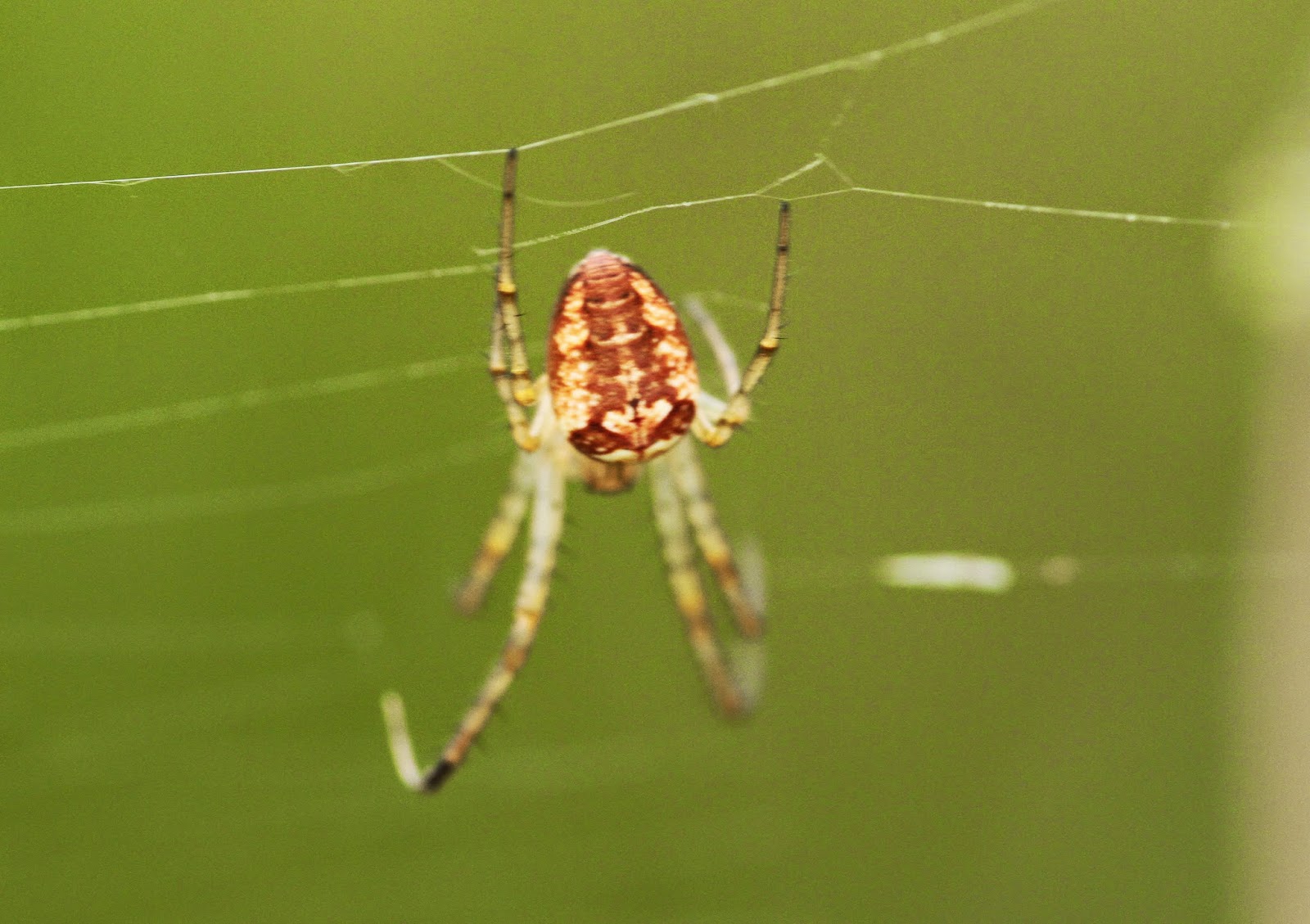
Whilst looking at the differences between the rushes we noticed many spiders web hanging between, a number of species were found such as: the Four-spot Orb Weaver Araneus quadratus, Marbled Orb Weaver Araneus marmoreus var pyramidatus, Furrow Spider Larinioides cornutus and the Lesser Garden Spider Metellina segmentata.

 Four-spot Orb Weaver Araneus quadratus
 Furrow Spider Larinioides cornutus
 Marbled Orb Weaver Araneus marmoreus var pyramidatus
Lesser Garden Spider Metellina segmentata

In the same damp area we found three new sedges for the year, and two which were completely new – Oval Sedge and Long-stalked Yellow Sedge, along with Common Yellow Sedge which we did find on the Common last year – a very small and low growing sedge – easy to miss!


Common Yellow-sedge Carex viridula

The Common is a good place to look for mosses, with three types of Polytrichum found: P.formosum, P.commune, P.juniperinum along with three types of Sphagnum mosses: S.fimbriatum, S.squarrosum, S.palustre.

Common Haircap Moss Polytrichum commune
Blunt-leaved Bog Moss Sphagnum palustre

On arrival at the flower pond we found that it was much drier than last year, however two of the species we’d hoped to find there from last year were found – Marsh St.John’s-wort & Marsh Speedwell, despite much searching disappointingly Shoreweed could not be found – one of the new species that was added to the species list last year. A Common Frog greeted us on arrival and sat quietly allowing close views and photographs. During September the last of this years frogs are dispersing from the ponds (with dispersal starting as early as June). After the breeding season adults can be found hiding in damp vegetation as they start to look for places to hibernate for throughout the winter.

Common Frog Rana temporaria

Lunch at the bomb bay loop provided an opportunity to scan the heath for Woodlarks and Tree Pipits, no joy with those two species but we did see a Green Woodpecker in flight and heard several Jays calling. A Common Lizard was spotted on the boardwalk by the propeller, basking in the warm sunshine. Sightings of lizards have become much fewer recently with the end of the season fast approaching.

Common Lizard Lacerta vivipara

The Marsh Gentians were counted, with numbers up to at least 60 plants – pleasing to see and several were starting to open. Marsh Gentians are only found on this one particular area of the Common, probably occurring because of the lime enrichment of the soil from the concrete nearby from the RAF base. The only other colony in the Vale of York is on Strensall Common SSSI. The area they occur on at Skipwith is managed to maintain their numbers by close mowing and disturbance of the soil in late autumn and early winter, reducing the competition by other species and leaving bare and open areas for them to thrive. This management seems to be working with a general increase over recent years from 60 or so flowering plants to around 150+.

Marsh Gentian Gentiana pneumonanthe

A walk round the bomb bay loop saw us add a few Lichens to the species list - Xanthoria parietina and Lepraria incana along with Pill Sedge and Annual Pearlwort – both new additions for the year. A group of five very small and newly emerged Fly Agarics were then found – one of the more brightly coloured and easily recognisable fungi species. Fly Agaric is probably the best known mushroom species due to its distinctive look and bright red colours, making it instantly recognisable. Fly Agaric appear initially like this one pictured here, before growing in size and height – with some individuals reaching 30cm tall! At it goes on to mature, the scarlet ‘cap’ opens and becomes flattened. This species is rumoured to get its name from medieval times when it was used as a fly killer – the cap would be broken up and mixed into saucers of milk – both attracting and killing flies.

Fly Agaric Amanita muscaria

Walking down the boardwalk adjacent to the bomb bay loop, two species of Shield Bug were on display, with Bronze Shield Bug and Birch Shield Bug found (including nymphs of both species). More information on Shield Bugs and our recent post can be read here. The pool is much quieter for dragonflies now with it nearing the end of the season, just Emeralds (2), Ruddy Darter (3), Common Darter (1) and Black Darter (1) were counted.

 Bronze Shield Bug Troilus luridus
 Emerald Lestes sponsa
Ruddy Darter Sympetrum sanguineum

A Harlequin Ladybird, form spectabilis was found on one of the many Silver Birch trees, along with a Yellow-tail caterpillar and a Green Leaf Hopper on the Juncus. Harlequin Ladybirds can vary in colour, from orange/yellow to black, and the number of spots can be between 2 and 22 - making identifying them quite tricky!

 Harlequin Ladybird Harmonia axyridis spectabilis
 Yellow-tail Euproctis similis
Green Leaf Hopper Cicadella viridis

To finish off the day we stopped at Wheldrake Ings for a short walk, in just an hour spent along the boardwalk to Swantail Hide we added a number of new species on such as: Marsh Willowherb, Good King Henry, Spear-leaved Orache, Orange Balsam and Greater Burdock.

Down the lane on the way out a beady eye spotted another two new species – False Fox Sedge and Tall Fescue – both key species and indicators of MG12 Grassland.

False-fox Sedge Carex otrubae

Many thanks again to Judith for another really good day, and for helping us to I.D a number of new grasses, sedges and rushes on the Common.