Welcome to the LDV NNR ringing blog, this blog is designed to share the experiences, findings and tales from a group of dedicated ringers. We specialise in conservation orientated research projects, largely focusing on wildfowl, waders, owls and birds of conservation concern, in and around the Vale of York NNR's.

NB - Whilst the purpose of this blog was initially designed to cover our nationally important wildfowl ringing activities, it now also features wildlife and work posts, explaining how we manage the NNR for both wildlife and people.

For daily sightings please visit our Twitter account: https://twitter.com/ldv_nnr (@LDV_NNR)

For details of events, volunteer tasks and wildlife images please visit our Facebook account: https://www.facebook.com/Lower-Derwent-Valley-Skipwith-Common-NNR

Friday, 10 February 2017

07/02/17 - Drake delight

Following on from our recent waterfowl catches which have included a number of Pintail, our success with this species continued into last week, with a catch of nine birds at dawn on Monday morning - including six males. Over the last 20 years we’ve only managed to catch and ring a total of 29 of this handsome duck, but since the turn of the year we’ve ringed 30, bringing the overall total suddenly to 59. On Monday morning we were fortunate to have clear blue skies and sunshine which really showed off the drake’s amazing plumage, so many beautiful colours which can be seen in the feather detail photographs below. We’re not sure why this month has suddenly been so successful for Pintail, after so many years of catching just one or two on average – but we’re certainly not complaining! Hopefully there may be yet more to come, with recoveries also. Following a count across the site last week along with records over recent days, numbers have shown to be steadily increasing and are now in the region of 250 birds. 


Wednesday, 8 February 2017

03/02/17 - New year, new tasks

This month our eager team of volunteers (or at least those who weren’t suffering with the dreaded lurgy), came in for the first tasks of the year, with plenty of variety to be had. Firstly our team were busy taking out the damaged fence line at Bank Island, and then helping to put the new one in place, which involved digging in the straining posts and then using the post knocker to secure the wooden stakes in-between. Mesh was then added followed by a top line of barbed wire – all being well this should keep the cows in place come spring. 


The following week the stormy weather that whipped up the North Sea causing flooding along the East Coast also blew down our bird feeding station at Bank Island – snapping the two main posts clean off at the base resulting in the frame and feeders ending up in the pond. Since our feeding station was built in 2012, the site has been a hive of activity and is now reliable for Marsh Tit, Tree Sparrows, Great Spotted Woodpeckers and Bullfinch. With the colder weather approaching again at the weekend we’d hoped to get it up and running again soon, and so our team kept busy the following week digging in two new uprights and attaching the top beam, before adding the lower beam and feeders. The height of the hedge was also lowered within the vicinity of the feeding station to provide better viewing and photographic opportunities from the car park. After lunch the team then helped make a start on next season’s logs with some chopping, splitting and stacking – thanks to everyone who has placed and received their orders and have helped the Friends of the Lower Derwent Valley raise money to further our work in the area at the same time. We still have some seasoned logs in stock so let us know if you need an order – we are looking to clear out our wood shed soon in order to refill with next winter’s supply.


Despite the freezing fog that blanketed the valley last week the team were out and about again covering a range of tasks, starting with trying to keep warm sawing, splitting and stacking more of next season’s batch of logs. After delivering more of our ready to burn seasoned timber to local residents, the team headed along the floodbank of the River Derwent erecting signs. These signs are to remind people that the majority of the Ings themselves have no public rights of way and that walking in these areas, especially with dogs, can cause considerable disturbance to the vast flocks of wintering waterfowl. Which, particularly in the present conditions, need to spend as much undisturbed time feeding up as possible. However whilst protecting the wildlife from disturbance we are obviously also keen that local people and visitors can enjoy the area, which can be done from the hides provided. Several of the team were also hard at work on Skipwith Common NNR, controlling birch and pine scrub, so a productive day all round.


Wednesday, 1 February 2017

28/01/17 - A busy year

2016: What a year - starting with one of the biggest January floods and finishing with one of the driest Decembers on record. By the middle of February the water was (very slowly), starting to recede, allowing us, and our new team of eager volunteers to start work on repairing the path and hide at North Duffield Carrs. The work at NDC kept the team busy throughout March and into April, when we then switched to weed wiping the floodbanks, transforming the base wildlife garden and giving a helping hand at Pillmoor and Plumpton Rocks. The first breeding bird surveys and butterfly transects began, and moth trapping resumed at the NNR base. DEFRA and Ad Astra also lent a hand on Skipwith Common, helping to make wildlife corridors from recently cut birch scrub. The first order of the LDV blank greetings cards arrived and the first talk of the year took place to the River Waveney Trust in Suffolk. 

Flooded out at NDC
Flood repairs underway
Nick & Sandra preparing the garden
Fence repairs on the Common
Successful day working with DEFRA
Ad Astra youth group get stuck in
New LDV greetings cards
Moth trapping resumes

During May a start was made on the resurrection of the Escrick Duck Decoy and the last of the flood repair jobs were carried out, along with the construction of several wood sheds at the NNR base to store our newly cut timber. A start was also made building many Swift boxes in conjunction with a new project involving the local communities and schools, and a helping hand was given by insurance company Aviva. Several visits were made to the local heronry with a pleasing number of chicks reared, and the successful transportation of geese from York University was undertaken. For the majority of June and July, pulling ragwort across the Ings meadows took priority, along with fitting in the start of our nest box checks and our annual goose round-up. Several (incredibly hot) days were also spent at Wheldrake clearing scrub from around the pool, and carrying out repairs to the swan pipe in preparation for the autumn. In July several of our staff and volunteers attended the ‘Graftas’ award ceremony at the London Wetlands Centre – after being nominated for and winning ‘volunteer group of the year’.

 Progress in the duck decoy
 New wood shed under construction
 Corporate work day with Aviva
 Successful Swift visit to Wheldrake school
 Heron chick
 Geese release
 Hand pulling Marsh Ragwort
Aviva return

August and September were largely spent at Thornton Ellers, making green hay and transporting it to sites in the surrounding area such as Leven Carrs and Skerne YWT reserve, with a number of days also spent at Wheldrake Ings removing and burning willows, and strimming the island vegetation at NDC. Our tractor also came out of hibernation, with flailing undertaken at Bank Island, Wheldrake, NDC and along the river bank. Jean came in to help out on what was a very popular and successful open day, and released yet another raptor back into the wild - a Common Buzzard, pictured here at the NNR Base. and A helping hand was also given at Hornsea Mere, helping to clear scrub from the island. The annual cygnet ringing took place at NDC, along with the last Barn Owls broods of the year ringed. We also had the good fortunate of several corporate work days with Aviva, Nestle and Amey.

 Spreading the green hay
 Tending to the path at NDC
 Habitat management
 Flailing at Wheldrake
 Release of a Common Buzzard
 Open Day success
 Road trip to Hornsea Mere
Corporate work day with Amey

In October the flailing was finished before the site began to ‘wet up’, and our attentions were switched back to the duck decoy, along with many a day spent clearing scrub at North Duffield Carrs. The yearly task of spraying pirri-pirri on Skipwith Common also began, along with the design and arrival of the new 2017 LDV calendar. The autumn was also spent visiting bird, gardening and walking clubs across the county with talks given by our Senior Reserve Manager. During November days were spent on Skipwith Common NNR clearing out the Pillwort ponds and removing birch scrub from the heath, a job which carried on throughout most of December – just as the valley started to flood. A day was spent at Jean's dismantling her old aviaries, the hide at the duck decoy was finished and the last gull catch of 2016 was had. That’s the year in a (very small) nutshell! Much more went on but it just wouldn’t be possible to list it all on here! Many thanks to all those involved in the valley during 2016, everything we achieved wouldn’t have been possible without all the extra help that our dedicated volunteers give us each week. Here’s to 2017!

 Sandra loading up the mule
 Cameron spraying on Skipwith
 Finishing touches to the decoy hide
 Dismantling Jean's aviaries
 Opening up the Pillwort ponds
 Gull catch at Rufforth Tip
 Splitting timber - for sale
 Nick removing birch on the Common

Friday, 13 January 2017

10/01/17 - Flashback

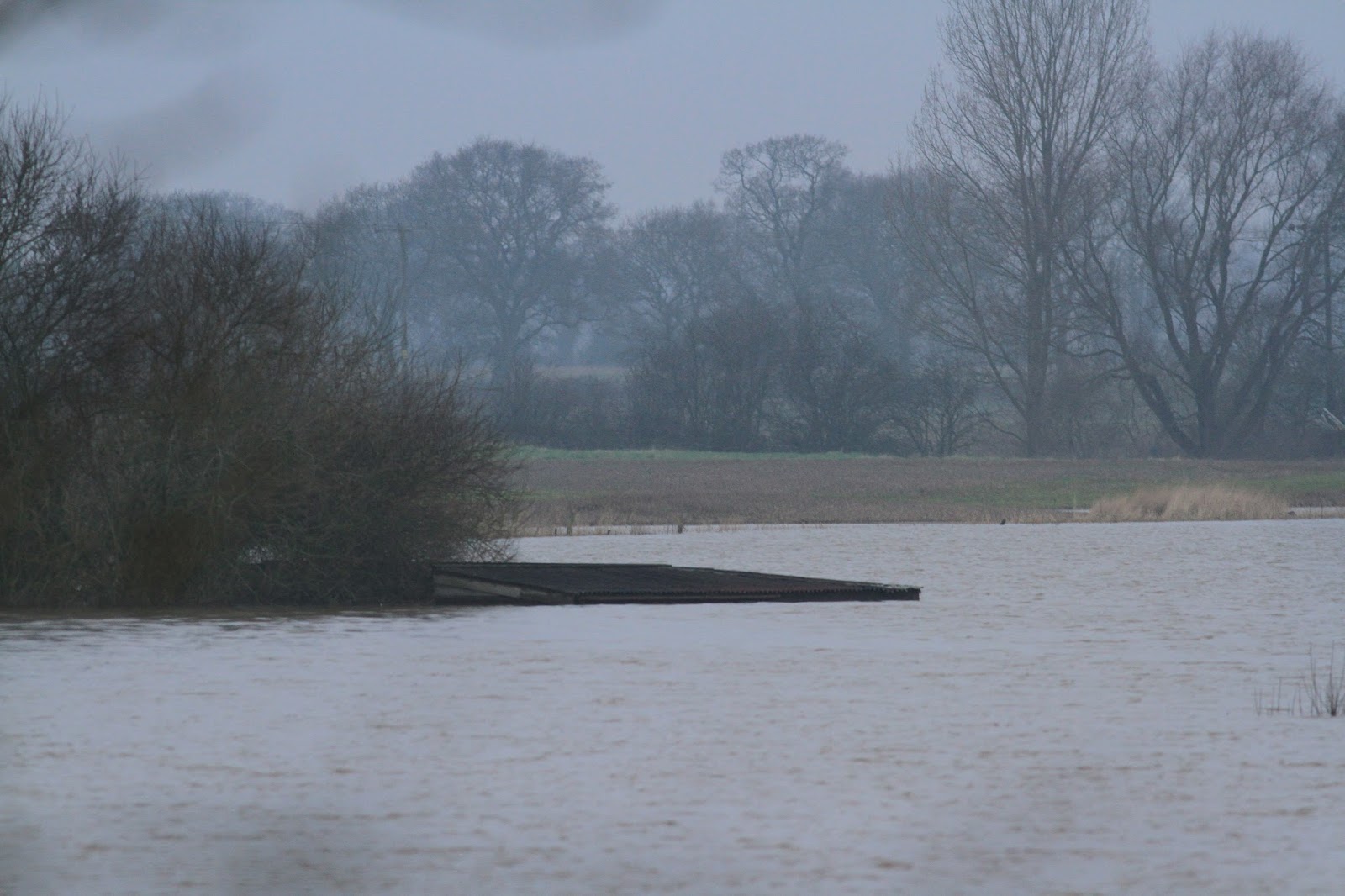
This time last year we were completely flooded out in the valley, with our main three sites - Bank Island, Wheldrake and North Duffield Carrs all under several feet of water. North Duffield Carrs was the worst hit, with the water reaching the roof of the hide (pictured below), resulting in an ongoing repair job to both the hide and path throughout the spring. The hides at Bank Island were out of bounds by us (but fortunately also out of reach from the water), however the Wheldrake boardwalk took a hammering after the river burst over the banks, flooding the track down to the hides, leaving only Tower Hide accessible – Reserve Manager Fallon Mahon is pictured here making his way down to do the monthly WeBS count. 

This year? Well it’s relatively dry, but that could soon change of course, whilst all the sites and hides remain accessible why not come down and see the wildlife that the valley has to offer – Wheldrake and North Duffield Carrs currently have vast flocks of Wigeon and Teal, along with Shoveler, Pintail, Goldeneye, Pochard, Tufted Duck, Scaup, Shelduck, Gadwall, Whooper Swans and many more. As always when visiting the reserve please let us know of any wildlife you see by using the log books provided in the hides – thank you.


Wednesday, 7 December 2016

30/11/16 - Gulls galore

Another successful gull catch at Harewood Whin landfill site at Rufforth last month resulted in 347 large gulls being cannon netted and colour-ringed as part of an ongoing project. The totals for the day included 344 Herring Gulls, 1 Greater Black-backed Gull and 2 Lesser Black-backed Gulls - bringing the overall totals of gulls colour-ringed since March 2015 to just under 1600. A total of 400 sightings have been sent in so far, involving nearly 200 individuals, with sightings stretching all the way along the East Coast and as far west as Bristol and south to Cornwall. 

A few highlights are listed below:

- Lesser Black-backed Gulls have been sighted in France, Spain, Portugal and Morocco.

- Herring Gulls have been reported from France, Jersey, the Netherlands, Belgium and Norway, and several have been noted interchanging between here and landfill sites down in Essex by the North Thames Gull group.

- A single Greater Black-backed Gull was caught with a Norwegian ring on, and one of our ringed GBB was spotted in Cornwall. 


The collection of this data is certainly adding to our knowledge of ‘local’ birds that join the nationally important LDV roost sites and feed on the landfill site during the day – and will hopefully tell us what these birds might end up doing after this site, like many landfill sites, start to close next year. Please send any sightings in of any colour-ringed birds seen whilst visiting the reserve or elsewhere – thank you. Many thanks to the team for their efforts and an extra thank you to the staff at Yorwaste, without whose help and cooperation this would not have been possible.