Armed with our hand lenses and books we headed down to Thornton Ellers first off where we decided to spend the morning, and searched for the species that we found there last year – and came across new ones along the way. Thornton Ellers is a diverse site - an Alder Carr woodland with a peat based fen and meadow, and adjacent post glacial sand dune - an interesting range of habitats together.

Twenty three new grasses, sedges and rushes for the year were found such as Sharp-flowered Rush, Velvet Bent, Heath Wood-rush, Purple Small-reed and Brown Bent. Many of the commoner and more easily recognisable species were still present although not many in flower, such as Yorkshire Fog, Soft Rush, Sweet Vernal Grass, Tufted Hair Grass and Toad Rush to name but a few.

Sharp-flowered Rush Juncus acutiflorus

Yorkshire Fog Holcus lanatus
Plenty of wildflower species were scattered throughout the
wet meadow however the large patch of Devil’s-bit Scabious had the greatest
variety with many species growing amongst it such as Marsh Violet, Fen Bedstraw, Lesser Spearwort and Marsh Cinquefoil.

Devil's-bit Scabious Succisa pratensis
Following the woodland edge and leaving the wet meadow
behind we came across species such as Yellow Loosestrife, Greater Bird’s-foot
Trefoil, Common Hemp-nettle, Purple Loosestrife, Water Pepper and Marsh
Woundwort.

Water Pepper Persicaria hydropiper

Common Hemp-nettle Galeopsis tetrahit

Purple Loosestrife Lythrum salicaria
Along with the wildflowers and grasses there were also
plenty of insects to have a good look at, Common Darters and Brown Hawkers
buzzed along the hedgerow, Small Skippers, Meadow Browns and Peacocks were
making good use of the Devil’s-bit Scabious and Gatekeepers were feeding on the few remaining Bramble flowers.

Common Darter Sympetrum striolatum

Small Skipper Thymelicus sylvestris
Many of the Helophilus hoverflies were also feeding on the
Scabious, largely Helophilus pendulus, amongst them we also spotted one of the wasp
mimics – Chrystotoxum bicinctum. A 22-spot Ladybird and Sloe/Hairy Shield Bug were found on the
walk back along with at least 10 Red-breasted Carrion Beetles which were
feeding on an old Partridge egg.

Wasp mimic Chrystotoxum bicinctum

22-spot Ladybird Psyllobora 22-punctata

Field Grasshopper Chorthippus brunneus

Sloe/Hairy Shield Bug Dolycoris baccarum
After several hours well spent in the meadow we headed off
and stopped by the Pocklington Canal for lunch, and revision on all
the grass species we had found throughout the morning!

On the way to the next location we stopped off at Aughton to
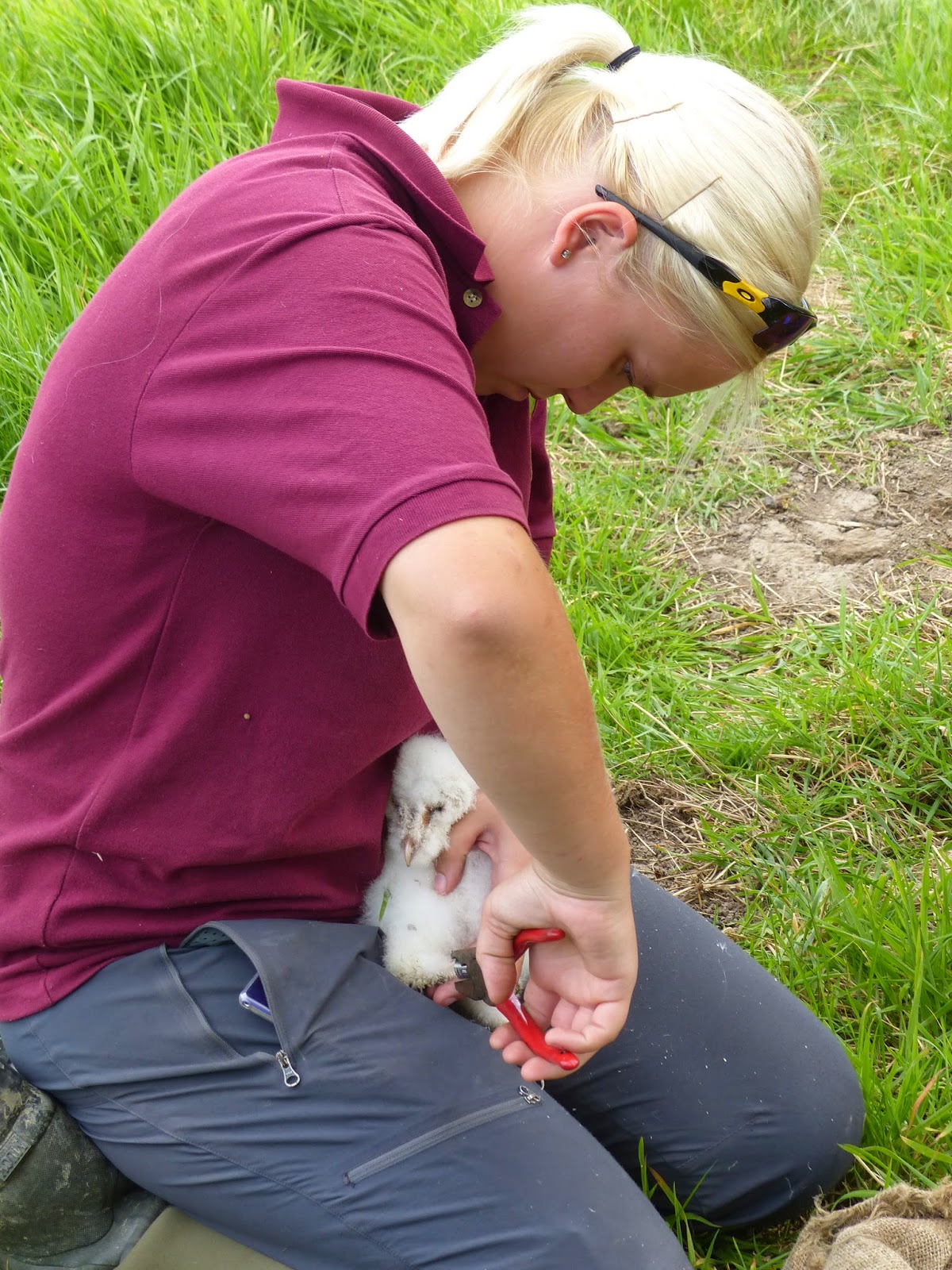
ring a brood of Barn Owl chicks that we knew should be ready to ring - seven weeks
ago when checking for second broods we found six eggs from a pair that had already
produced five young. Five chicks were present in the box, all of a ring-able size bar one.

From there we headed to Wheldrake Ings where we spent an hour
in the meadow near Swantail Ings, here we came across a number of grasses and wildflowers such as Bladder Sedge, Slender Tufted Sedge, Marsh Speedwell, Water Dock and Trifid Bur-marigold - some which were new for the year and taking us to a day total of 127 species from the two sites.

Trifid Bur-marigold Bidens tripartita
We also came across two ladybirds which were new for the year, the Harlequin Ladybird (form H.spectabilis) and the common 2-spot
Ladybird. Many of the Helophilus and Sphaerophoria hoverflies were making the most of the Water Mint, Purple Loosestrife and Trifid Bur-marigold which are all now in flower across the Ings.

Harlequin Ladybird Harmonia axyridis spectabilis

Hoverfly - Helophilus trivittatus
Overall a very enjoyable day with a great deal learned about a whole range of species. We look forward to Judith's next visit which will cover the plants of Skipwith Common.
No comments:
Post a Comment