Welcome to the LDV NNR ringing blog, this blog is designed to share the experiences, findings and tales from a group of dedicated ringers. We specialise in conservation orientated research projects, largely focusing on wildfowl, waders, owls and birds of conservation concern, in and around the Vale of York NNR's.

NB - Whilst the purpose of this blog was initially designed to cover our nationally important wildfowl ringing activities, it now also features wildlife and work posts, explaining how we manage the NNR for both wildlife and people.

For daily sightings please visit our Twitter account: https://twitter.com/ldv_nnr (@LDV_NNR)

For details of events, volunteer tasks and wildlife images please visit our Facebook account: https://www.facebook.com/Lower-Derwent-Valley-Skipwith-Common-NNR

Tuesday, 22 March 2022

20/03/22 - New recoveries

The first returning Sand Martin was seen over Bank Island last week (13/03) - a day after we received a recovery of an individual from last summer: ringed here as a juvenile on the 01/08/21 - re-caught 28 days later at Sandouville, Seine-Maritime, France - 497 km to the south. Hopefully it's now on its way north, possibly back to the LDV, where our Sand Martin bank is ready and waiting for occupants. 


We've also had a flurry of Shelduck recoveries recently, including an individual ringed at Bank Island in February 2018, which was then re-sighted in February 2021 at Zierikzee Zuidoek in The Netherlands  - 412 km east of the LDV. This is our third foreign movement (two to the Netherlands and one to Germany). Many thanks to our great team for all the hours put in helping to collect this valuable data, which is now producing a wealth of information on the ecology and movements of this species.


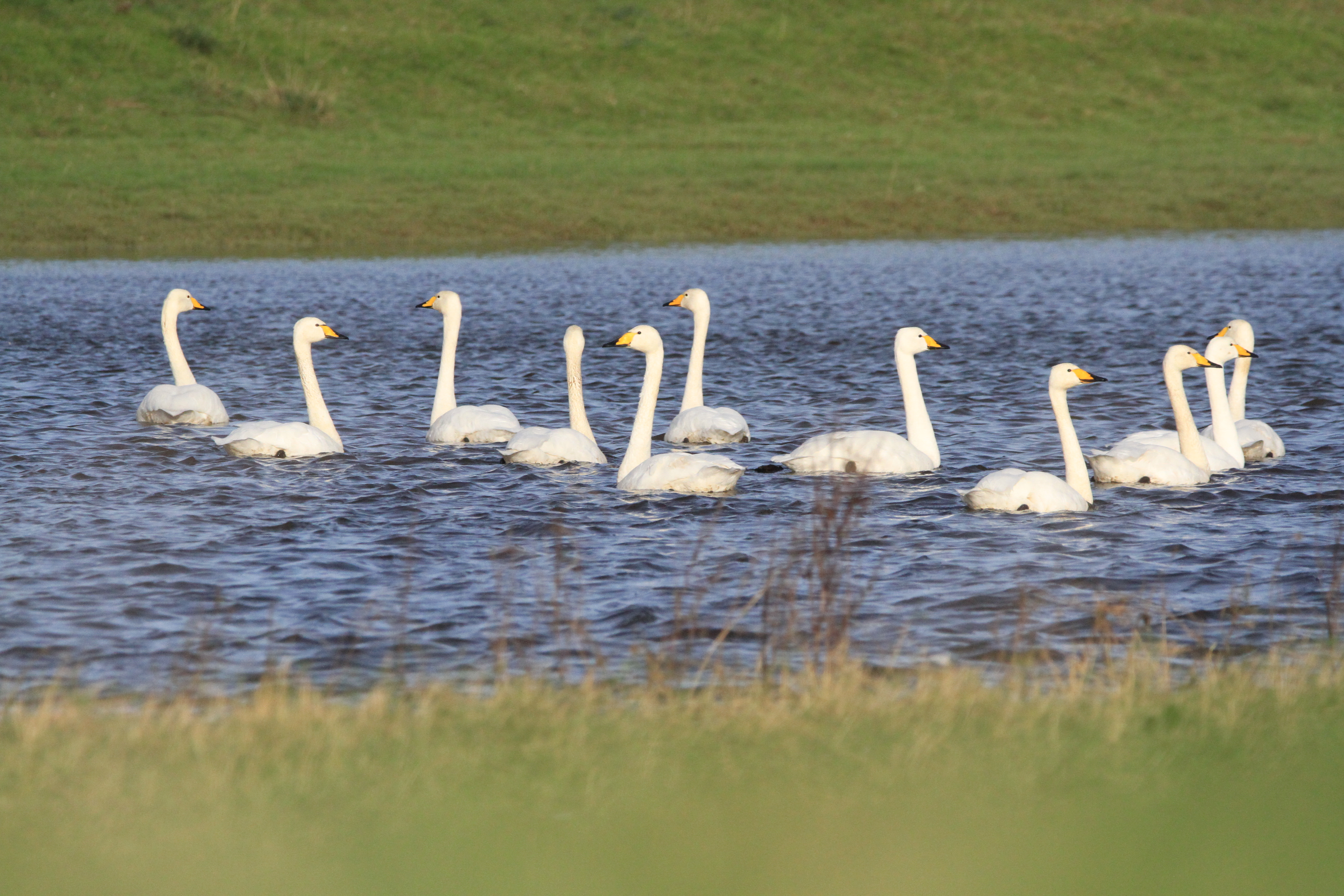
Whilst our breeding birds are starting to return, some of our wintering visitors are lingering, including the flock of Whooper Swans at Derwent Farm in North Duffield, where a colour-ringed individual was spotted recently. ZXI was ringed at Caerlaverock in Dumfries and Galloway on the 19/02/10, where it then subsequently returned each year from 2010 until 2019 (bar 2015). After three years of not being sighted anywhere, it then appeared at Adlingfleet in East Yorkshire, on the 03/02/22, before joining the Whooper Swan flock in the LDV, where it was spotted by our team on the 13/03/22. It's unlikely to be here for much longer, with the remainder of the flock soon heading back to Iceland for the breeding season, with just 40 individuals present during the recent WeBS count. 
  

Thursday, 3 February 2022

18/01/22 - Gull roost

One of the most spectacular winter scenes in the LDV, (although often under-rated), is the immense gull roost at Wheldrake Ings. This roost is nationally important, regularly supporting in excess of 20,000 birds, largely comprising of Black-headed and Common Gulls in recent years, as birds move from their day-time feeding sites in the wider area and Yorkshire Wolds, to roost on the flooded Ings. Numbers of the larger gulls (Great Black-backed and Herring Gulls), have declined following the closure of landfill operations at Harwood Whin near Rufforth, where the gulls would spend the day scavenging for scraps. The ringing of the birds at Rufforth have shown that the same individuals roosting at Wheldrake have come from/go as far as the Bering Sea in the Arctic Circle, Scandinavia and eastwards towards Russia, as well as southwards into southern Europe and North Africa – a range of 5000km from the Ings.

If you'd like to see the roost then best to aim for 3pm onwards, when birds start to come into roost an hour or so before dusk - gathering on the water in front of Swantail Hide where a passing Peregrine can panic the flock into a scene not dis-similar to a snow globe - well worth a visit. Thanks to local birder Duncan Bye for the image.

Wednesday, 19 January 2022

08/01/22 - Smew influx

Over the last couple of weeks it has been pleasing to see several Smew on the NNR and surrounding water bodies. Smew are winter visitors to the UK, with most birds not arriving until at least December -leaving again by the middle of March, before spending the summer in the taiga forests of northern Scandinavia and Russia, where they nest around lakes, ponds, rivers and other water-logged places - ideally with plenty of trees where they nest in holes and cavities.


The number of Smew reaching the UK each winter has decreased dramatically in recent decades, with them now being considered a scarce visitor (over recent years not many more than 100 individuals have wintered in the whole of Britain). This decrease has been attributed to the effects of climate change, with warmer winters reducing the distance they have to travel from their breeding grounds to escape freezing conditions. Up to six females (red heads) and a stunning drake (White Nun), have been seen recently, with Wheldrake Ings the best location to see them. It would appear cold conditions in continental Europe have forced these birds (with small numbers of White-fronted Geese and Bewick’s Swans) into the country. Thanks to local and regular patch birder Duncan Bye for the image.

Friday, 14 January 2022

02/01/22 - Bewick's Swans

During the festive season we were delighted to locate a family party of five Bewick’s Swans on the NNR – something of a scarcity in recent years. During the 1970’s and 80’s, numbers of wintering Bewick’s Swans were regularly between 100-250 (occasionally 300+), happily spending the winter in our relatively mild conditions, compared to those on their breeding grounds on the Russian tundra. However, since the 1990’s numbers have fallen sharply, with a mere handful of birds recorded most winters over the last decade or so – the reasons however are likely to lie outside of the reserve.

The population of Bewick’s Swans have experienced a large decline across their range, with birds now wintering in the Low Countries in Europe, possibly in response to climate change - for example there is no longer the need to fly all the way from Russia to York if they can spend the winter feeding on enough food, for example, in the Netherlands. However, maintaining good conditions for them is always important should a cold snap on the continent force herds back across the North Sea, as may be the case here – their arrival coinciding with an arrival of Smew and White-fronted Geese onto the NNR.

Monday, 20 December 2021

06/12/21 - Woodcock arrival

During our thermal nocturnal surveys on the Ings and surrounding farmland last month, we noticed a dramatic increase in the number of Woodcock feeding after dark. Their timing couldn’t have been better, occurring on the full moon - the November full moon is often referred to as the ‘Woodcock moon’. Traditionally it was thought that Woodcock would wait for moonlit nights before crossing the North Sea to arrive, sometimes appearing in large numbers along the East Coast before moving onward throughout the country.

Around 100,000 breeding birds in the UK increase to in excess of a million birds wintering here, as birds from Eastern Europe move west in search of milder conditions. These birds spend the nights feeding (largely on earthworms), on farmland, pasture and the Ings grasslands after dark, before then spending the daytime in dense cover in the undergrowth of hedgerows and woodlands. Here their cryptic camouflage comes into its own as they melt away into the leaf litter on the woodland floor. When visiting the reserve keep a look out at dawn and dusk as birds fly on and off the Ings.