Welcome to the LDV NNR ringing blog, this blog is designed to share the experiences, findings and tales from a group of dedicated ringers. We specialise in conservation orientated research projects, largely focusing on wildfowl, waders, owls and birds of conservation concern, in and around the Vale of York NNR's.

NB - Whilst the purpose of this blog was initially designed to cover our nationally important wildfowl ringing activities, it now also features wildlife and work posts, explaining how we manage the NNR for both wildlife and people.

For daily sightings please visit our Twitter account: https://twitter.com/ldv_nnr (@LDV_NNR)

For details of events, volunteer tasks and wildlife images please visit our Facebook account: https://www.facebook.com/Lower-Derwent-Valley-Skipwith-Common-NNR

Monday, 31 October 2016

26/10/16 - Skerne YWT

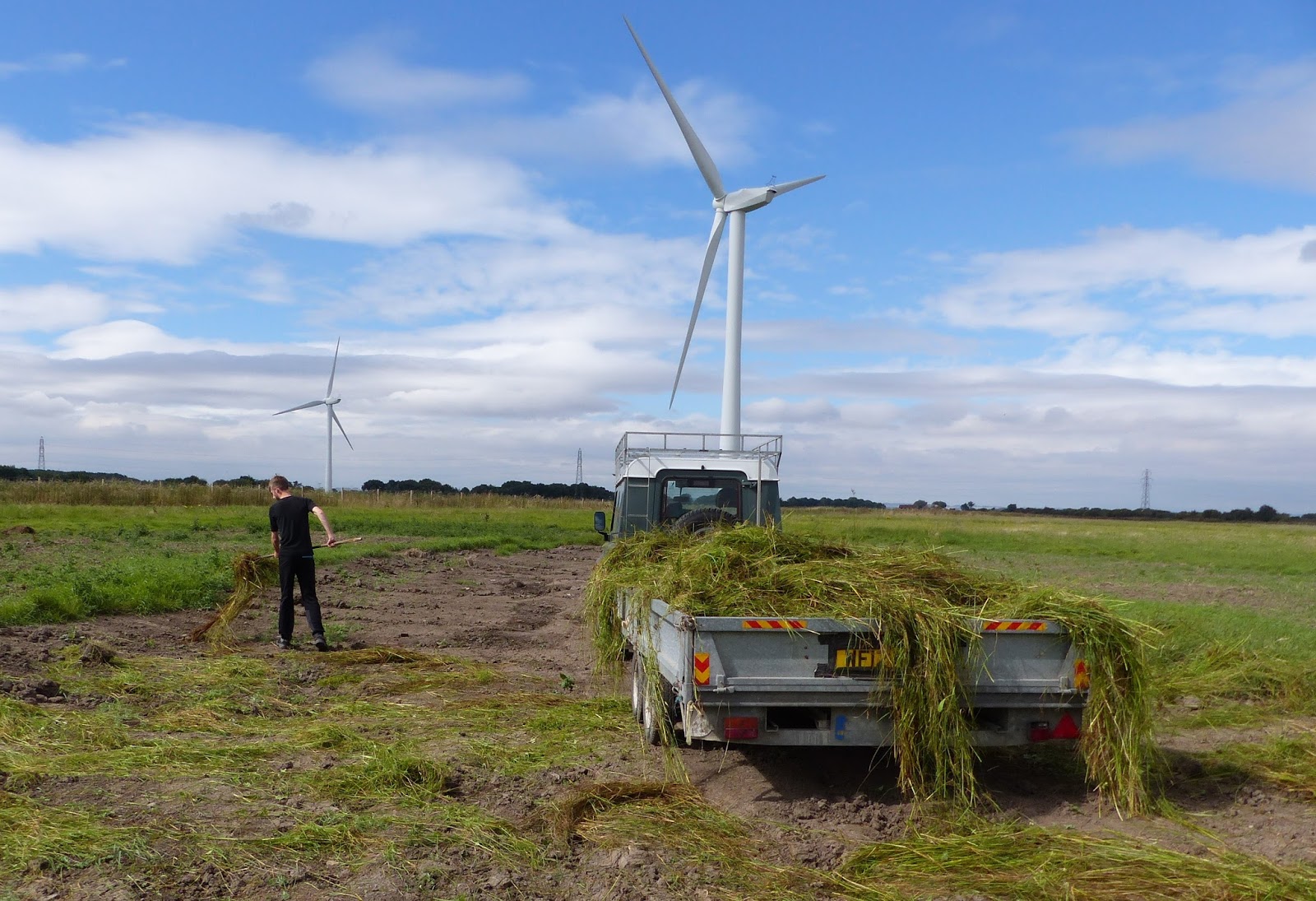
Throughout September the team were hard at work cutting the meadow at Thornton Ellers and transporting it as 'green hay' to the Yorkshire Wildlife Trust’s new reserve at Skerne near Driffield, where the chalk streams that form the headwaters of the River Hull rise through the Yorkshire Wolds. Many of these streams are recognised as important habitats and are designated as Sites of Special Scientific Interest. The YWT have been working with the Environment Agency and NE to develop a restoration plan to improve the area, with the aim of turning this former 70-acre commercial fish farm into a mosaic of wetland habitats. All being well, as the seed drops out from our green hay (species such as Devils-bit Scabious, Ragged Robin, Marsh Valerian, Water/Corn Mint and Trifid-bur Marigold), it will help develop these fen and wet grassland communities, whilst linking up the site with others in the Hull Valley that we’ve also been helping with – Tophill Low and Leven Carrs. It’s exciting to be involved in such a landscape scale river catchment project – and many thanks as always to our volunteers for the extra help. 


Thursday, 27 October 2016

20/10/16 - Amey delivers

The ongoing battle to keep up with willow management on the reserve resumed last month with an army of helpers arriving - including a group from the national organisation – Amey (S&C North Alliance) - whose day to day job usually involves rather different work, such as providing support services to our highways and railways. Amey were then closely followed by a team from the York bird club, so in total, a fantastic number (22 people combined), helped us to finish off the willow clearance on Wheldrake Ings, largely around Pool Hide, Swantail Ings and the reed bed areas. This will help the Yorkshire Wildlife Trust get on top of the management at this key site within our National Nature Reserve. We never fail to be amazed how much groups like Amey can achieve in one day, cutting, dragging and burning scrub with their enthusiasm and drive, thus helping to make the limited budgets and resources of the NNR team and YWT stretch even further, whilst helping the wildlife along the way. Many thanks to all involved – and we look forward to welcoming another group in the new year. 


Thursday, 22 September 2016

17/09/16 - Green Hay

Over the last few weeks our volunteers have been busy helping us to cut the meadow at Thornton Ellers - and in incredibly hot temperatures! After the team had cut the hay with the allen scythe and raked it into piles, it was forked on to the trailer. 


The first load was then taken over to Leven Carrs near Beverley, where the hay is being used as a green seed source. Leven is just one of a number of grassland recreation sites in the county involved in this type of project, and over the next few weeks further loads will be heading off to help one of the Yorkshire Wildlife Trust reserves. 


Throughout the day our volunteers also helped to bale some of the meadow using the mini-baler – the bales made will be used for habitat piles, duck traps, animal feed and starting some of our bonfires to get rid of all that excess scrub. 


During lunch the team enjoyed watching the butterflies and bees feeding on the Devil’s-bit Scabious in the meadow – with a Painted Lady and Small Copper being the highlight. As always many thanks to the team for their efforts.

Monday, 19 September 2016

12/09/16 - Team work at NDC

Despite the hot temperatures recently our team have managed to make a further dint in the ever growing job list, with a number of days spent working across the site. Fantastic progress has been made at North Duffield Carrs, with several days spent strimming and spraying the path down to the hides, trimming back the hedges, and clearing the willows from in front of the hides for the benefit of our visitors. Willow scrub was also cleared from the Ings meadows which unfortunately provides perches and nesting sites for predators – notably Carrion Crows.


One of the other big jobs was to 'top' the Hawthorns along the river bank fence line, to keep them small and compact for our breeding birds such as Reed Buntings and Linnets, and again to prevent Crows using them for nesting/perching. 


Another big task was then tackled, which saw several of the team wade across the water to strim the island at the ‘top pond’. Each year we clear the vegetation off the island to keep the water an open and attractive place for the first returning waterfowl, which also like to loaf in the safety of the island once it’s been cut. With glorious blue skies and sunshine all day we were fortunate to see plenty of wildlife whilst busy working, Brown Hawkers and Ruddy Darters zipped over the island, whilst Peacocks fed on the Water Mint and thistles, and this year’s toads and frogs battled their way through the cut vegetation.


Finally, the team have also been busy helping repair the damage to our swan pipes caused by the winter floods, as well as the more regular and ongoing tasks such as replacing worn mesh, servicing the doors and strimming out the vegetation. Due to the recent hard work, over the last few weeks we have been able to start our autumn waterfowl ringing in style, with two catches in the North Duffield pipe accounting for a total of 45 Mallards, 4 Gadwall and 2 Shoveler – making it one of our better years for catching our two key target species (Gadwall and Shoveler), with totals of 35 and 18 respectively.


Friday, 16 September 2016

10/09/16 - Field Voles & flailing

Now that the farmers have just about finished their work in the valleys meadows, it’s that time of year when the team take their turn behind the wheel of our tractor. Each year following the hay cut, during August/September we spend time flailing the wetter and ranker vegetation that has been left around the scrapes such as the sedges, rushes and Glyceria, and the Meadowsweet and docks left along the fence lines. By cutting the rank vegetation it will help to prevent the area becoming a mono-culture dominated by just one or two species, and hopefully halt any further spread from the edges of the meadows into the botanically rich areas. Flailing the ditch sides and bunds also improves them for nesting, and feeding/loafing areas by many species of birds, whilst providing a mosaic of habitat structure for invertebrates as well as maintaining view lines for visitors using the hides. 


Last week whilst heading back to the base after a morning spent flailing, we heard the squeaking of a small mammal coming from the grass beneath us. On closer inspection - and within a few feet from the tractors wheels – we discovered a small pile of grass containing the nest of a Field Vole with four small young in it. Field Voles often nest under grassy tussocks, or occasionally in underground burrows, and have on average six litters a year, varying between 3-7 young.

Field Voles are prolific breeders, with populations in favourable habitat often increasing to thousands, in what is known as a ‘vole plague’. When this happens, competition for space, food and increased aggression leads to less successful breeding, with the result being a population decline. Due to the fluctuations in the population, it can then impact on the predators that feed on them, such as our Barn Owls – with Field Voles forming 90% of their diet – fortunately we haven’t noticed a shortage this year, with a number of extra voles found in the boxes during our checks.