Welcome to the LDV NNR ringing blog, this blog is designed to share the experiences, findings and tales from a group of dedicated ringers. We specialise in conservation orientated research projects, largely focusing on wildfowl, waders, owls and birds of conservation concern, in and around the Vale of York NNR's.

NB - Whilst the purpose of this blog was initially designed to cover our nationally important wildfowl ringing activities, it now also features wildlife and work posts, explaining how we manage the NNR for both wildlife and people.

For daily sightings please visit our Twitter account: https://twitter.com/ldv_nnr (@LDV_NNR)

For details of events, volunteer tasks and wildlife images please visit our Facebook account: https://www.facebook.com/Lower-Derwent-Valley-Skipwith-Common-NNR

Friday, 27 April 2012

26/04/12 - More Whimbrel....more water....

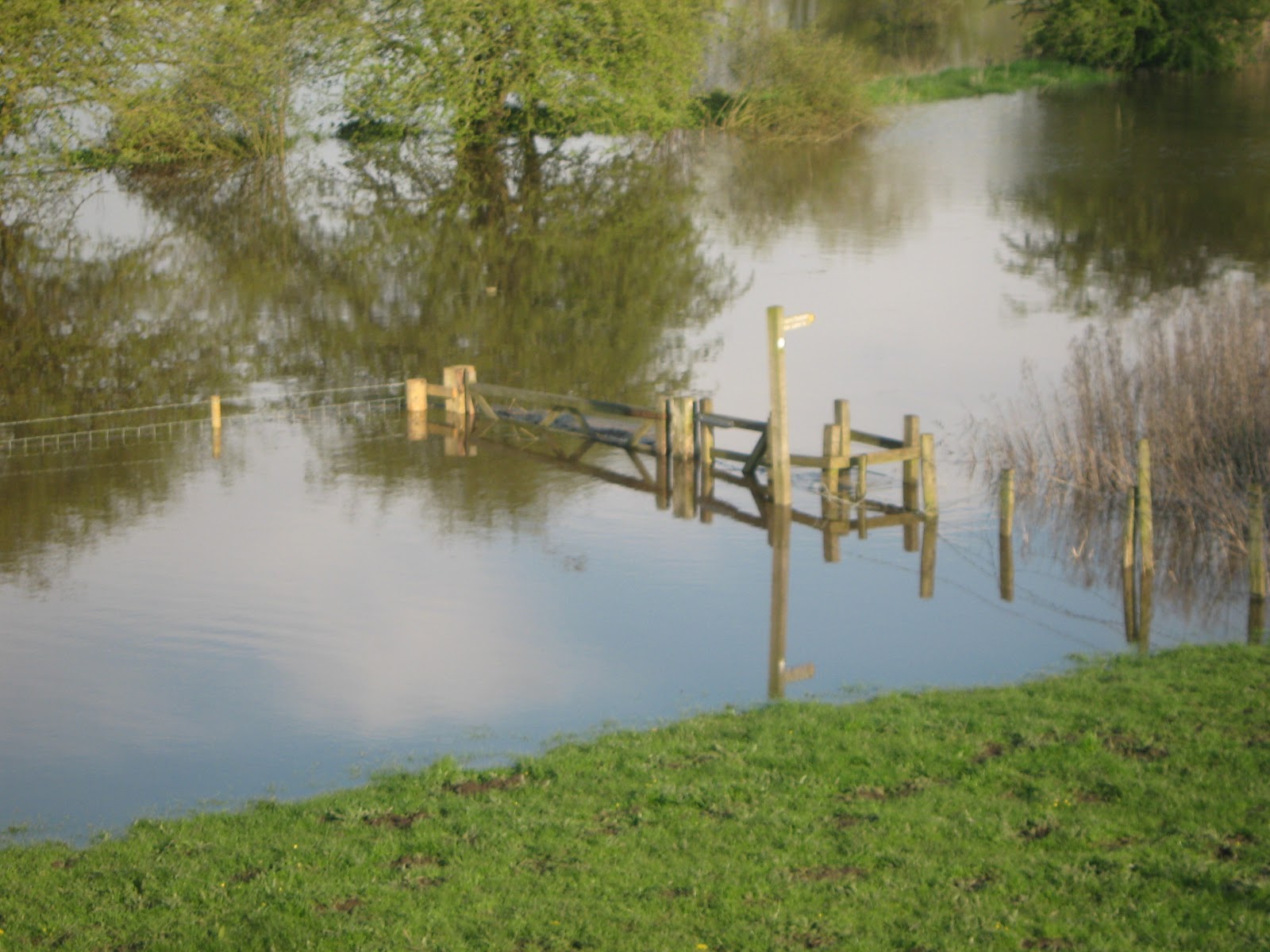
It’s probably fair to say the UK has been experiencing a bit more than April showers during the last week or two! The rain has continued to fall and increased flooding in the valley, Wheldrake is now in-accessible as the carpark stands under 3 foot of water. Ellerton is currently looking more like a lake than a field and the river at Bubwith bridge is looking rather full (a few photographs can be seen at the bottom of the post).

Wednesday (25th) was a particularly poor day weather wise, with torrential rain for the majority of the day making it impossible to pick out any colour-ringed Whimbrel. Despite the bad weather Dave went to the roost at Thorganby and counted 38 birds.

Thursday (26th) was a much better day and the weather allowed great views of the Whimbrel in the fields at Storwood and Thorganby which resulted in 4 ‘new’ birds for this year, plus 3 already seen (O-Y/Y, Y-L/L & R-R/R). Craig & Dave went to Thorganby in the evening & counted 46 birds coming in to roost - the highest count yet. The details for the four new birds from Thursday can be seen below:


Whimbrel: Yellow - White/Yellow

2009 - Ringed on 29th April.
2011 - Re-sighted by PR on 19th & 27th April.
2012 - Re-sighted by CR on 26th April.


Whimbrel: Orange - White/White

2006 - Ringed on 23rd April, re-sighted on 8th May.
2012 - Re-sighted by CR on 26th April.


Whimbrel: Pink - White/White

2010 - Ringed on 19th April, re-sighted on 2nd May.
2012 - Re-sighted by LM & CR on 26th April.


Whimbrel: Pink - Red/Red

2010 - Ringed on 19th April, re-sighted on 2nd May.
2012 - Re-sighted by LM & SH on 26th April.


Here's a few photographs from around the valley which show the extent of the flood.............

 Wheldrake footpath will be out of use for awhile!

 Ellerton landing underwater

 River Derwent at Bubwith bridge

Wednesday, 25 April 2012

25/04/12 - Whimbrel: Three more returnees!

It’s been a strange spring with some individual spring migrants appearing very early whilst the majority of them are still to arrive, most are thought to be waiting in Spain and southern Europe having been held up by a weather front. It’s affected lots of migrants but it appears to have held up the return of the Whimbrel too. So far it’s been more of a steady arrival than usual but numbers are slowly building up, and it just means we have to work a bit harder to try and find them and read colour-rings in the longer grass when they do return! 

At the weekend Craig was out & about around the valley looking for Whimbrel and on Sunday he managed to pick out a new colour-ringed bird for this year (Orange - Lime/Yellow, originally ringed in 2006) as well as the three also seen a few days ago. On Monday Lucy scoped the fields around the Storwood area and had 13 birds - four of which had colour-rings including yet another new sighting, Pink - Lime/Red, this time a bird originally ringed in 2010.

Yesterday (Tuesday 24th) we had the highest count so far this year, with atleast 28 birds counted throughout the valley. Lucy & Jean scoped the fields around Storwood and Thorganby and picked out three colour-ringed birds, two already reported this year but another new one was also present: Red - Red/Red, originally ringed in 2008. Below are the full histories for the three 'new' colour-ringed Whimbrel.


Whimbrel: Orange - Lime/Yellow

2006 - Ringed on 5th May.
2011 - Re-sighted on 29th April.
2012 - Re-sighted on Sunday (22nd April) by CR.

Whimbrel: Pink - Lime/Red

2010 - Ringed on 2nd May.
2012 - Re-sighted on Monday (23rd April) by LM.

Whimbrel: Red - Red/Red

2008 - Ringed on 25th April, followed by regular sightings until 2nd May.
2012 - Re-sighted on Tuesday (24th April) by LM/JT.


If the passage runs as normal we are now about a third of the way through. Although the number of birds present is low  (about half the normal number expected for the date), 6 of the 100 colour-ringed birds ringed since 2004 have been seen so far this year, compared with 14 during the full roost period during 2011. It may well be that there are more birds out there that we don't know about or haven’t seen yet, so there’s still plenty of checking to do. Also, there have been years in the past such as 1992 and 1997 when the peak numbers were much later than usual - 6th and 9th May, so numbers may reach a sizeable peak yet. There is some suggestion from the bird information services that birds are finally reaching Britian, with 52 at Rye Harbour on 23rd April (another spring passage site) and larger numbers moving through other sites. We also heard from Peter Roworth on Monday (23rd) and 10 were present at Saltfleetby & Theddlethorpe Dunes NNR.

Several evenings have been spent at Wheldrake waiting for the birds to come into roost, however due to a large part of the valley being flooded at the moment (see photos below) the Whimbrel are unable to come in to roost at this traditional site. Their behaviour is completely different this year and mirrors that of 2004 when we last had a large spring flood during the roosting period. It is also making it hard to count the number present as we yet don’t think we’ve found all the daytime feeding birds or been able to count them accurately at a single roost - watch this space for further updates....


A flooded Bank Island - 20th April 2012


Below is a view from Swantail Hide on Wheldrake Ings (traditionally the favoured roost site for the Whimbrel) - this photograph was taken almost two weeks ago and since then with all the rain that has fallen (55+mm) the whole site is completely flooded, we couldn’t even get to this hide to take a comparison photograph!

The floods have undoubtedly caused heavy losses to many breeding waders and some waterfowl nests have been lost, but we’ve also seen the first Greylag and Mallard broods appearing. The wetter conditions have also proved attractive to other species with over 200 Tufted Ducks arriving in recent days. We’ve also seen two Black-necked Grebes appear so it may be a good breeding year for them again - keep an eye out for a forthcoming post on the results of our Black-necked Grebe colour-ringing project - we might even get the chance to extend it this year!


 View from Swantail Hide on Wheldrake Ings - 13th April 2012


Rather wet drought conditions...!!
Monday, 23 April 2012

23/04/12 - They’re back!

Following the appearance of the first two returning Whimbrel at the Wheldrake roost on Wednesday evening (and with the bird information services showing a few more scattered around the country), Craig visited the feeding fields around Storwood on Friday evening (20th) after work.

Arriving at the favoured field, three birds were present and rather amazingly, all three were colour-ringed - two from 2009 and one from 2006! How nice it is to find these old returning ‘friends’ and how amazing it is, having travelled approximately 16,000 Km since they were last here, to appear in exactly the same feeding field. Below are the full histories for the three birds:


Whimbrel (EL49641): Orange - Yellow/Yellow 


2006 - Ringed on 23rd April, followed by regular sightings until 2nd May.
2009 - Re-sighted by DT on 20th April, followed by three more sightings from PR until 25th April.
2010 - Re-sighted by PR 19th April (afternoon) then caught at the roost - fitted with a radio tag - last signal/sighting on 27th April.
2011 - Re-sighted by CR/DT on 20th April, followed by three more sightings from PR until 29th April.
2012 - Re-sighted on Friday (20th April) - 16,000 Km round trip to get back to the same field on either 19th or 20th April this year. Note whilst ringed on 23rd April 2006 it may have arrived on 19th or 20th, it also shows no lasting effect on the bird from radio tagging.


Whimbrel (EL49892): Yellow - Lime/Lime 


2009 - Ringed on 29th April, not reported again.
2010 - Re-sighted by PR 19th April (afternoon) then caught at the roost - fitted with radio tag, last signal/sighting on 30th April
2011 - Re-sighted by PR on 24th April, followed by five more sightings until 29th April.  
2012 - Re-sighted on 20th April.


Whimbrel (EL49888): Yellow - Red/Red


2009 - Ringed on 29th April, not reported again.
2012 - Re-sighted on 20th April.


The bird ringed in 2006 may well have clocked up to 96,000 Km since we originally caught him! Impressive stuff! There was no time to check for any other birds in other fields as they flew off for the roost site at Wheldrake Ings at 8.05pm - still, what a start!


Keep an eye out for our coloured feathered friends!
 

Sunday, 22 April 2012

20/04/12 - Purple patch

Well, it's more of a rustic brown really - or according to the 'Identification Guide to European Non-Passerines' - maroon/chestnut. Purple patch is actually more of a reference to 'a period of notable success or good luck' as the saying goes! Either way, it's the colouration of the median coverts of a male Gadwall's wing, a truly beautiful duck and often under-rated amongst British waterfowl. 

This week we closed down one of the duck traps as now can often be a good time for catching ‘bored’ males as most of the females are incubating clutches and don’t visit the traps. The traps are only run for a day or two at a go and are checked more regularly throughout the day in order as to not interrupt breeding activities. So it was a nice surprise to find (in addition to 3 Moorhens and a Mallard), four male Gadwall! Unfortunately no camera was handy but here are a couple of photographs taken on a Blackberry!

Adult male Gadwall


Up to the end of 2011 we had ringed 215 Gadwall in the Lower Derwent Valley NNR, over 200 of those being ducklings (photo from last year below). We’ve seldom caught adults, one or two have been caught in the whoosh nets over the years and the odd one has found its way into the duck traps, largely during the early autumn. This is our largest single catch of adult Gadwall ever - and of presumed local breeder status too. Only 110 adult Gadwall were ringed in Britain in 2011 so that’s nearly 4% of the total in one go - a useful addition.

 Gadwall - North Duffield Top Pond - 01/08/11

It was also a case of the 'Ings at its best' on Wednesday evening, with 196 islandica Black-tailed Godwits newly arrived (the biggest count since 1997) and 38 Arctic Terns passed through (part of the large movement throughout the country - and the biggest count here since 1983). The first two returning Whimbrel also came in to roost and a reeling Grasshopper Warbler was heard (first for the spring).

Thursday, 19 April 2012

19/04/12 - The power of plastic strikes (again!)

Kane Brides from the WWT has been in touch again this week with details of another Whooper Swan recovery. 'K3K' has been sighted in Ross-shire, Scotland, it was originally ringed (as an adult) in the LDV at North Duffield Carrs during the 2008 cannon net catch. This is the second Whooper re-sighting that we've had of late - a few weeks ago data came back on 'K3H' - a bird ringed during the same catch in 2008, had been sighted in Norway - see Norway...? No way! for details.

2008 Whooper catch - North Duffield Carrs
 

'K3K' was present in the valley during the winter of 08/09 and then returned the following year and wintered in the valley during January 2010. It was next heard of on 24th February 2010 when it was caught at the WWT centre at Caerlaverock, Dumfries, Scotland, presumably when it was returning northwards on its return migration to Iceland. It wasn’t seen or heard of until the following winter when it returned to the valley, it was first sighted on 26/11/10 and last sighted on 12/03/11. The most recent sightings have been the winter just gone - 2011/2012 - instead of wintering in the valley, 'K3K' returned once again to Scotland and on 22/11/11 it was sighted in Fearn, Drome, Nr Balintore (Ross-shire), followed by Tullich Farm, Nr Balintore (Ross-shire) on 16th & 18th March 2012, so clearly a change in wintering area.

History of Whooper Swan ‘K3K’:

Year

Method

Date

Location


2008

Caught

30/11/2008

LDV, North Yorkshire
2009

Sighting

03/01/2009

LDV, North Yorkshire
2009

Sighting

06/01/2009

LDV, North Yorkshire
2009

Sighting

08/01/2009

LDV, North Yorkshire
2009

Sighting

09/01/2009

LDV, North Yorkshire
2009

Sighting

19/02/2009

LDV, North Yorkshire
2009

Sighting

26/02/2009

LDV, North Yorkshire
2009

Sighting

07/03/2009

LDV, North Yorkshire
2009

Sighting

16/03/2009

LDV, North Yorkshire
2010

Sighting

02/01/2010

LDV, North Yorkshire
2010

Sighting

18/01/2010

LDV, North Yorkshire
2010

Sighting

19/01/2010

LDV, North Yorkshire
2010

Re-caught

24/02/2010

Caerlaverock, Dumfries
2010

Sighting

26/11/2010

LDV, North Yorkshire
2010

Sighting

12/12/2010

LDV, North Yorkshire
2010

Sighting

19/12/2010

LDV, North Yorkshire
2010

Sighting

24/12/2010

LDV, North Yorkshire
2010

Sighting

31/12/2010

LDV, North Yorkshire
2011

Sighting

03/01/2011

LDV, North Yorkshire
2011

Sighting

31/01/2011

LDV, North Yorkshire
2011

Sighting

05/02/2011

LDV, North Yorkshire
2011

Sighting

01/03/2011

LDV, North Yorkshire
2011

Sighting

05/03/2011

LDV, North Yorkshire
2011

Sighting

12/03/2011

LDV, North Yorkshire
2011

Sighting

22/11/2011

Fearn, Drome, Nr Balintore, Ross-shire
2012

Sighting

16/03/2012

Tullich Farm, Nr Balintore, Ross-shire
2012

Sighting

18/03/2012

Tullich Farm, Nr Balintore, Ross-shire

All the sightings from the valley were recorded by Peter & Janet Roworth, so thanks goes to them both for taking the time to get out & about looking for colour-ringed birds, it really is worthwhile especially when it leads to piecing together a birds journey. 

Whooper Swans - North Duffield Carrs
 
 Peter Roworth

The second recovery to come our way this week has been that of a colour-ringed Coot. It’s one from a few years ago which was first reported in 2010 but the sighting and photograph have only just come our way. The bird in question is the one from our latest blog post about colour-ringed birds (Look out look out colour-ringed birds are about!). It was ringed as a young male on 20/10/08 at North Duffield Carrs and was next seen on 29/11/10 at Cleethorpes Country Park, Lincolnshire. It was then seen a few days later on 06/12/10 by Colin Smale who took the superb photograph below. 

LDV colour-ringed Coot - Cleethorpes - 06/12/10
Colin Smale - FOTOLINCS.COM

Colin takes wildlife photographs on a regular basis around the Lincolnshire area, these can be seen on his website - http://www.fotolincs.com/ or you can follow him on twitter at - fotolincs. After tracking down the colour-ringed Coot and several other colour-ringed birds it resulted in an article being published in the Lincolnshire Today Magazine, this can be read here (page 71-72).

Colin has been photographing birds for many years but has recently become interested in colour-ringing after spotting several birds with colours on his 'patch'. He was most intrigued after taking photos of a flock of Knot and realising there were two birds with coloured flags. This is a snippet taken from the magazine article - "As I watched I suddenly noticed among the sea of greenish legs a splash of red - with one bird sporting a red ring with lettering on it. I couldn't quite see the letters so I photographed the bird, and when I enlarged the picture I could clearly see the letters 'ENY'. Within a few minutes there was a second colour-ringed bird. It too had a yellow 'tab' with the letters 'LUC' - which I thought very appropriate!"

Norwegian flagged Knot
 
Colin Smale - FOTOLINCS.COM

Eventually Colin found out that 'LUC' was ringed as an adult in May 2009 at Marnes in Northern Norway - about 1400 miles North East of Cleethorpes. It was seen a few days later in the same area but then it wasn't seen again until it appeared infront of Colin a year later - again in Cleethorpes. It's mate 'ENY' was ringed on the same beach but two years earlier in May 2007. She was seen again two years later at North Brenna in Porsanaga, Norway, and not seen again until she turned up with 'LUC' in Cleethorpes! For more details of Colin's colour-ringed sightings and to read the rest of this article click on the link above. Once again all the information that has been gained wouldn't have been possible without catching and colour-ringing these birds, showing again the importance of colour-ringing.

Colour-ringed Black-tailed Godwit
Colin Smale - FOTOLINCS.COM

It's really great (for us as ringers) to know that there's folk out there like Colin who enjoy taking wildlife photographs yet at the same time are contributing to the collection of ringing data and helping us to piece together the lives and journeys of the birds we love to watch!

Colin Smale - FOTOLINCS.COM