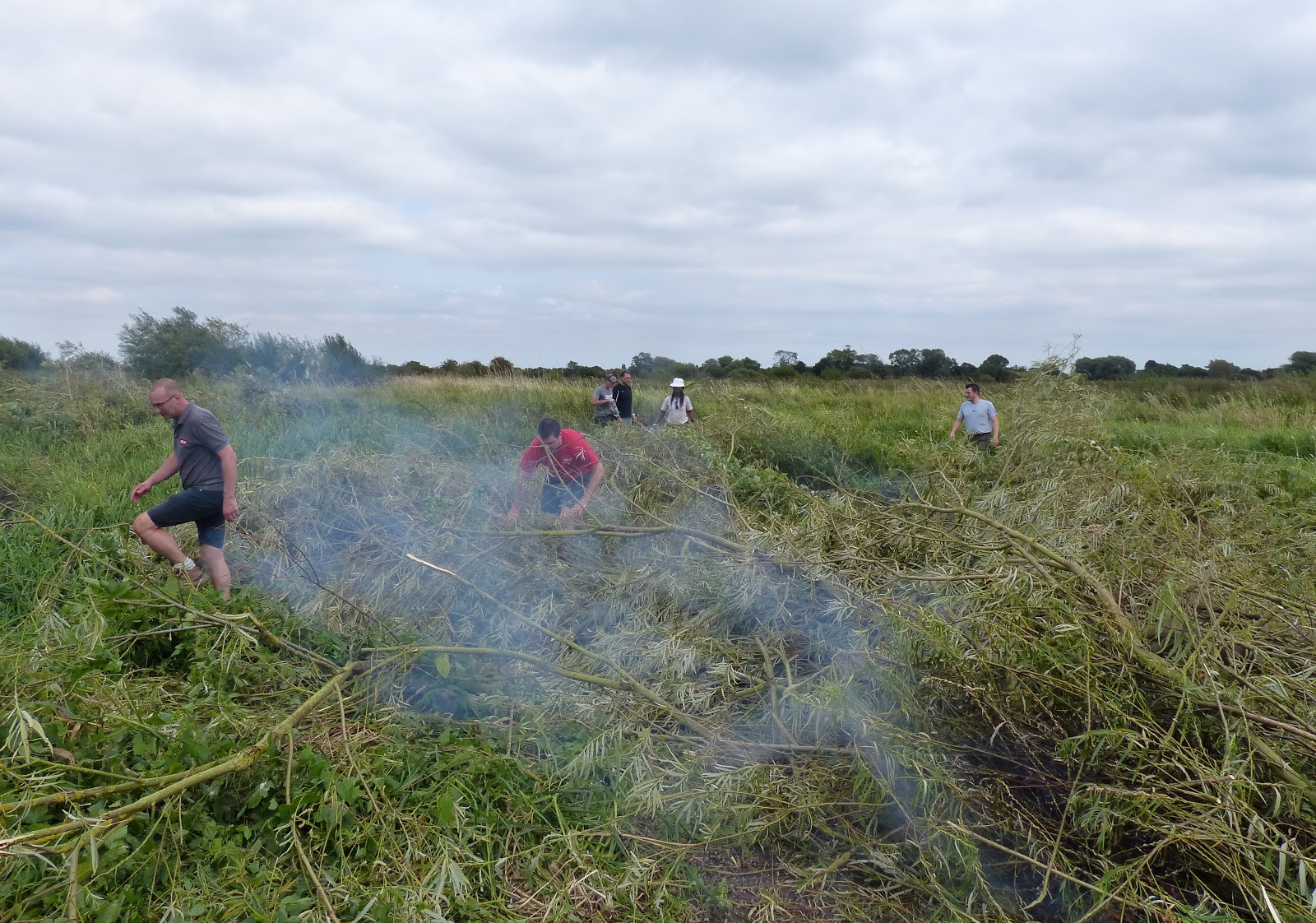
At the beginning of the week we were delighted to welcome back a team of corporate
volunteers from the York branch of Nestle, for a day helping out with scrub
clearance on Wheldrake Ings. After teas/coffees and a meet and greet at the NNR
base, the team headed out onto the reserve to undertake willow management.
However before the hard work began, we stopped off on the way to see Mike and
Chris who very kindly put on a bird ringing demonstration for the team, giving
everyone the opportunity to see birds in the hand, and to find out about
migration and how some species use the reserve for refuelling on their long
journey. The team then made a start clearing willows from some wetter areas on
the site, with the aim of helping to maintain the open views across the Ings. Many
thanks to everyone involved for a really productive and enjoyable day.
Pages
▼
Tuesday, 29 August 2017
Friday, 25 August 2017
20/08/17 - Team work
Last week our team of eager volunteers were hard at work
once again, helping us make great progress with scrub clearance at North
Duffield Carrs on Tuesday, and North Duffield Ings on Thursday – willows were
lopped, hawthorns were topped and a good day was had by all!
Working in glorious sunshine (complete contrast to the drenching
everyone experienced the previous week!), the team did a great job of
continuing to lower the height of the hawthorns – thus reducing the number of
perching posts for crows, whilst maintaining close and dense bushes for
breeding buntings and warblers. Throughout the day more willows were also
removed, with the cuttings added to last week’s pile, ready for burning next
week.
Monday, 21 August 2017
14/08/17 - Corncrakes
We are pleased to be able to announce that Corncrakes have once again had an excellent
year in the Lower Derwent Valley at their only regularly English breeding site
away from the Ouse and Nene Washes re-introduction sites. Corncrakes have been
almost annual visitors to the valley over the last three or four decades, but
over the last six or seven years have shown a real trend of being established
once again as a regular breeding species, which follows the introduction of several
conservation measures by NE in partnership with local farmers and landowners.
This year a total of eight calling males have been present, and
behaviour of those present suggest at least five pairs may have bred and
attempted second broods in the valley this year – many people have been able to
enjoy listening to the birds in front of the hides at Wheldrake Ings and North
Duffield Carrs, with one or two lucky visitors also enjoying sightings. Recently
fledged young have been seen at North Duffield. Many thanks to everyone
involved in this fantastic success story – and if you’d like to know more about what
lengths some of the local farmers have gone to in order to protect this important species, by trialling 'Corncrake friendly mowing' - as pictured below - then please visit the Facebook
page of our friends at Rosewood Farm.
Friday, 11 August 2017
03/08/17 - Working and 'swanning'
This week our fantastic team of volunteers have been hard at work once
again, this time helping us to manage the hedges, riverbank hawthorns and
scattered willows at North Duffield Carrs, and with so many extra pairs of
hands several of the team were also busy strimming vegetation at the ‘top
pond’, whilst two eager souls waded across to the island to rake and burn the
remaining cut vegetation. Throughout the course of the day we also flailed the
edge of the meadows, bunds and ditch sides, in order to help maintain the open
landscape that has been well appreciated by our breeding waders this year
(following similar management work last summer and autumn).
At the end of
another very productive day, we then finished off by catching one of the resident
broods of Mute Swans – a pair with five cygnets, in order to ring and
colour-ring them as part of our long running population study. Many thanks as always to the team for all their hard work.
Wednesday, 9 August 2017
01/08/17 - Minster Peregrines
Over the last few weeks Jean has been up to her usual amazing and heroic
efforts in rescuing and safe guarding our special wildlife, particularly birds
of prey. Some of our regular followers might remember that earlier in the year
Jean was involved in successfully looking after several juvenile Peregrines,
and releasing them back into the wild - including the young bird that was featured
on Springwatch, following the illegal persecution of its parents. Three of the
other chicks fledged from their foster nests, whilst a fourth bird was returned
to another site near Ferrybridge having crash landed on an early
flight. That bird wasn’t to be the last Peregrine Jean would see this year
though – as last week one of the York Minster chicks ended up on the ground on
its maiden flight. Jean was soon in action and safely returned the chick to the
nesting ledge to keep it out of harm’s way until it gets a little bit more strength
in those flight muscles. After a few years of attempting to breed on this
site this is the first time they have been successful.
After an absence until the 1980's, Peregrines have since become regular
winter visitors to the area, with four or five birds seen on an almost
daily basis around the reserve. The first breeding pair was recorded six
years ago in the adjacent area, and now it’s great to see them back in
the heart of the city – well done to all involved and well done once
again Jean for all the great work you do.
Sunday, 6 August 2017
26/07/17 - Making hay
With a break in the weather last week the valley has been
a hub of activity with the local farming community busy making hay. This
traditional practice of mid-summer hay making has been taking place for
centuries, which, followed by aftermath grazing and the mix of summer grazing
pastures around the valley, has shaped both the flowers and bird communities
(and other wildlife), we enjoy on our doorstep here. Hay making can take place after
the end of the bird breeding season and once the seeds have started to drop
from the various wildflowers and grasses. The cutting of the grass also helps
keep in check the more vigorous and dominant species of vegetation, and helps the
finer grasses and more delicate herbs to flourish. This in turn helps maintain
not only the meadows in good conditions for the flowers, but in providing
suitable feeding conditions for our wintering waterfowl and breeding waders
in subsequent seasons – all part of the rich seasonality of the Ings.
Wednesday, 2 August 2017
22/07/17 - Kestrel success
At the end of last week we returned to our new Kestrel site, three
weeks after finding five tiny newly hatched young. On arrival at the site, a
natural tree hole in a large Ash, we were greeted by two large chicks peering
down on us. Hoping the other chicks were at the back of the hole, we climbed up
to unfortunately find just the two of them. Both of the chicks were quite well
feathered and likely to survive, and being so advanced enabled us to sex them
by looking at the colour of their tail feathers (grey for males, brown for
females).
This brood aside, on the whole it’s been good news, Kestrels seem to have had a very
successful breeding season around the valley this year with a good number of birds being
seen across the site - just this last week we've started to see fledged broods at Wheldrake and North Duffield Carrs - with six recently fledged chicks at both sites.