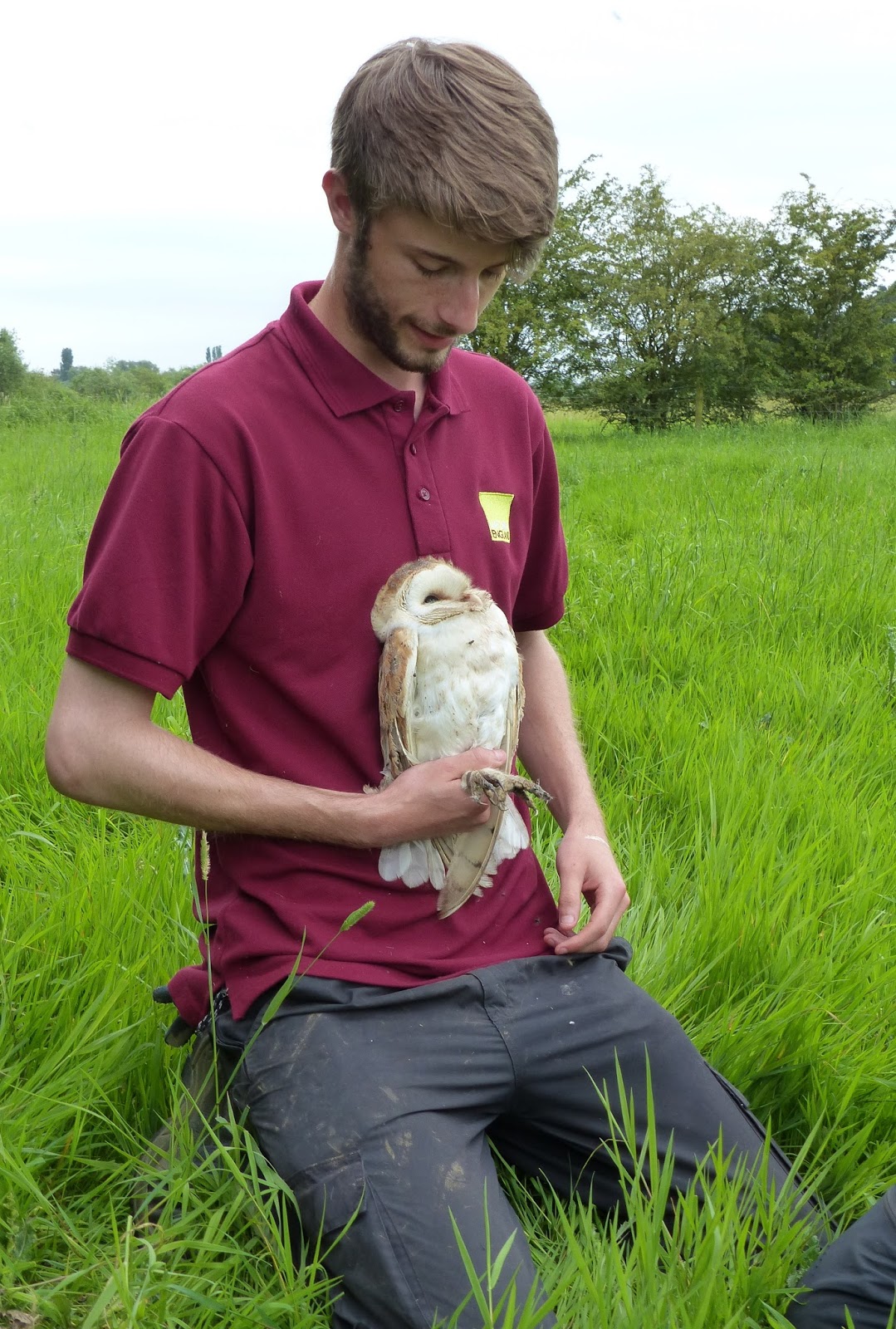
As part of a national NNR project, earlier in the year
we were fortunate to be able to take on a three month survey and monitoring
trainee. Cameron started working with us in April, and since then he has been
getting involved with the monitoring work that takes place on and
around the NNR, including carrying out grassland surveys, monitoring newts on
Skipwith Common, running trail cams for otters in the Lower Derwent Valley,
carrying out butterfly transects and helping to run the moth trap at the NNR
base. Cameron has also been working on a project to promote the conservation of
Swifts throughout the local villages surrounding the NNR’s, which has involved
making nest boxes with Ad Astra and Aviva, whilst also running workshops in
local schools. Last week he also joined us out on site as we started to check a
few Barn Owl sites as part of our long term project – so there has definitely
been plenty to keep him busy and engaged. In the short time that he’s been with
us, Cameron has been a real asset to the team – so many thanks for all your
hard work Cameron – and for being prepared to muck in with any job – even the
ragwort!
Pages
▼
Thursday, 28 July 2016
Wednesday, 20 July 2016
15/07/16 - Kestrel success
Last summer, following a kind invitation from the
landowner, we were able to access a new
Kestrel site in Bubwith. The owner made contact after a single chick had fallen from the box, on
inspection the box was found to be rotten, with holes appearing, as well as
being full to bursting with old nesting material, pellets and general
detritus following many years of use – however six large and almost fledged
young were somehow squeezed in – pictured below.
Earlier this spring prior to
the breeding season, and as promised last year, we arrived with a replacement
box with the other one unlikely to be fit for another season. We took down the
existing box and replaced it with a slightly bigger and ‘roomier’ one. We also
transferred a little bit of the old nesting material out of the original box
into the new one to make the Kestrels feel more at home straight away. Other
than initially having to fend off a pair of interested Jackdaws, everything
worked out brilliantly for the pair of Kestrels, with them soon making
themselves at home. On our visit recently we arrived to find a healthy brood
of four tucked away in the back of the box - and in no danger of falling out - a
brilliant result and many thanks again to the owners for keeping a close eye on
this pair.
Monday, 18 July 2016
13/07/16 - Pulling
At this time of year our team of staff, volunteers
and contractors have been working hard out in the meadows hand pulling Marsh
Ragwort once again. Although ragwort is a natural component of the unimproved
and seasonally flooded hay meadow communities, it is poisonous to livestock
when included in the hay cut. As a result, the team have been removing it in
order to keep the cutting of the meadows for hay (the main underpinning
management of the site), as viable as possible for our tenants and the local
farming community. On a warm sunny day the meadows are a fantastic place to be - brimming with Greater Burnet, Pepper Saxifrage, Yellow
Rattle and Ragged Robin, whilst singing Curlews and drumming Snipe are heard
over head, although the work is incredibly hard! Especially on the cold and wet days like we've experienced recently when time goes very slowly! So a big thank you to our team for getting stuck in to
the job whatever the weather, especially our new volunteers.
Following the rather delayed start to the breeding wader
season as a result of the prolonged and lingering winter floods, there are
still several late broods of Lapwing chicks around the reserve at the moment,
including newly hatched young at Thornton Ellers and North Duffield
Carrs. At the latter site a single pair made a scrape and laid four eggs
on the bund in front of Garganey Hide, with the eggs only hatching recently
having been laid quite late. Last week whilst out checking ditches and managing
water levels on the Carrs we spotted one chick feeding in the long grass, as we
approached it sat down tucking itself amongst the vegetation. It was well
camouflaged against the ground with its dark grey/brown mottled coat, pictured below.
Friday, 15 July 2016
10/07/16 - Shovelers & Gadwall
Following the hard work of our volunteers helping to repair the swan
pipe at North Duffield recently, whilst out on the site with the Environment Agency last week, we were fortunate to find this delightful
brood of three Shoveler ducklings feeding in it.
This season is proving to be a good one for ducks so far
– as predicted earlier in the year due to the wet spring and late winter
flooding. The high water levels restricted access to their chosen nest sites by
predators, whilst at the same time encouraging many pairs to linger and remain
to breed. The shallow flooding later in the spring then provided great feeding
opportunities for the young broods. Over the last few weeks we’ve seen two
broods of Garganey (confirming successful breeding), and several broods of
Shoveler, whilst up to 50 Gadwall ducklings have been crèched together on the
pool at Wheldrake Ings.
So far this season a total of 10 Gadwall ducklings have been caught – taking the total ringed in the valley to over 300, and adding significantly to the knowledge of our British bred birds and their movements. So far these have generated two recoveries to Ireland and a single to France, as well as several within England. We’ll hopefully be adding a few more to this year’s total over the next two/three weeks until the young fledge and start to disperse away from the site.
Monday, 11 July 2016
05/07/16 - Geese release
Over the course of the last few months we have been in talks with York University, to try and find an effective way of dealing with their
geese ‘situation’. After an ongoing problem the University applied for a
licence to control the birds on site due to a public health concern, and a
health and safety issue. Natural England were keen to find a novel approach to
helping the University which involved catching them and releasing them onto the
Ings. With the Uni being so close to the reserve in the Lower Derwent Valley,
which is also an SPA, we needed to find a way to manage the population at the
University without affecting the population on the Ings as we know birds move
between both sites. Last week we received a call to say that the first group were ready to be collected, with c40 waiting, with another 40 ready a couple of days later - most of the first group were the young birds, with the adults following in the second catch. Both groups of birds were ringed and later released on to the River Derwent at North Duffield Carrs.
Aside from an hour spent transporting, ringing and releasing the geese, the rest of the day we were busy catching up on jobs with our fantastic band of volunteers from the East Coast. The
morning involved carrying out repairs and improvements to the swan pipe at
North Duffield following the damage caused to it by the winter floods. Coincidentally
we also received news in the morning of a Wigeon ringed at the site in 2010, which was
found in May this year, in Khanty-Mansiysk, Russia, over 2250 km away –
recoveries and information like this is exactly why we do this type of work. The afternoon was then spent strimming, hedge
trimming and allen scything paths and over hanging bushes around Bank Island. At
the end of the day we also managed to squeeze in ringing a brood of Kestrels at
Bank Island – a feisty brood of five. Many thanks to the team
for all their hard work, effort and enthusiasm.
Friday, 1 July 2016
26/06/16 - Swiftly does it
Following their first visit last month, a second team from the insurance company Aviva
visited the base recently as part of their corporate volunteering time. After a quick
introduction to the reserve, the team set about making Barn Owl boxes which are
to be installed around the site as part of our long running project. As well as
owl boxes, the team also helped construct a number of Swift boxes as part of a
new project that we have recently started, involving the local communities and
schools. Everyone worked hard cutting out the templates and constructing
boxes – so much that we even had to go and collect more timber to keep up with
them! In total, 13 Barn Owl boxes and 12 Swift boxes were made – making
for an enjoyable day as well as making a real contribution to the local
populations. At the end of the afternoon we also checked one of our local Barn
Owl boxes with the group, which allowed them to see an adult and chick at close
range – a great end to a fantastic day – many thanks again to the group for their
hard work and enthusiasm.